Andre Kertesz
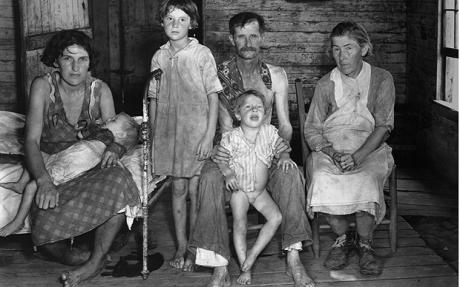
Talented Hungarian born photojournalist named Andre Kertesz stamped his name in history of photojournalism with his great skills to make something out of the ordinary photo. He believed to be invisible and did not alter his photo. Truthful and real work of Andre followed him wherever he traveled. His best masterpieces were done in France in 1920’s yet his biggest impact was in USA in the 60’s and 70’s.
His skills of always looking for the best shot and creating angles in order to make the photo look more real brought him to the point where he was able to touch and change people’s lives forever. One of the soldiers from his photo (photo1) died later in the war. He wanted to offer a photo to a widow of the soldier as solidarity with her loss but it was his only photo. We can see how Andre was emotionally involved in his photos but that still did not make him alter it or stage it to show his emotions. He was a true artist and a photojournalist.
 |
| Photo 1 - Kertesz |
Henri Cartier-Bresson
The”godfather of photojournalism” as they called him, created a unique style of photojournalism. He clearly promoted that a photo should not be disturbed in any way. A belief that he should be invisible when taking a photo ensured that photo will send a truthful message to the world.
His leadership skills and creative style combined and he became a co – founder of one of the most successful photo organizations called Magnum Photos. He also encouraged flexibility which would allow him to take a photo and send a message in his own words. No matter what the photo was about he always tried his best to bring out the full potential out of a scene or frame that he was capturing. Henri described photography in his own words: “To take a photograph is to align the head, the eye and the heart. It's a way of life.” (Magnum Photos)
 |
| Photo 2 - Cartier-Bresson |
Eugene Smith
Eugene Smith was the American who learned about photography from his mom at a very early age. He developed his style of planned and staged photography. Even if this was against all ethics, his style still brought a clear message to the readers all over the world.
He was taking photos of wars and world disasters and was inputting his own message into the photos. He believed that a photographer should be at the scene and every one of his photographs had his signature. Eugene once said: “I wanted my pictures to carry some message against the greed, the stupidity and the intolerances that cause these wars.” (American Masters)
 |
| Photo 3 - Smith |
Sebastiao Salgado
Sebastiao Salgado was a master of his own. He was from Brazil but became popular all over the world for his photos. He was capturing only black and white photos. In addition his style was to use lighting as a tool to alter the photo and put his own signature on it.
The use of light in the photo of Spanish Wake is perfect example of his style. In 1986 he published a book called “Other America” and included were photos of the poor in Latin America. Salgado focused on the sad things in life and was trying to bring the truth trough a staged photo.
 |
| Photo 4 - Salgado |
What are the main differences and similarities?
Kertez and Cartier were two photojournalist artists who strongly opposed altering images. Their styles were similar in the sense that they both believed they should be invisible in the photo. Even though their photos were not staged they still needed creativity and were transmitting a true message of a life in the world.
Smith and Salgado focused more on sadness of the life. They thought that a photo had to be altered and they were present in all their master work. Whether it is fully staged photo or postproduction editing, the message was sent from a photographer to the people.
All four of them brought a lot to photojournalism so I believe that they helped future generations in choosing which path they want to take.
What is better journalistic approach?
Better journalistic approach would be the one that Kertesz and Cartier used. This is due to the fact that codes of ethics in journalism do not allow altering and staging of the photos. That is exactly how these two artists saw photojournalism. They wanted the truth to get out there without being changed in anyway.
The approach of Smith and Salgado was wrong as far as codes of journalism ethics go but it was a nice creative way to bring to us the sadness of the photo and the ambient.
After all if their approaches were not good, would I be writing about them now? They are masters of photojournalism and without them the people would not have same perspective of the world.
Works Cited
American Masters. American Masters. 2011. 26 03 2011 <http://www.pbs.org/wnet/americanmasters/episodes/w-eugene-smith/about-w-eugene-smith/707/>.
Cartier-Bresson, Henri;Tériade E. The Decisive Moment: Photography. New York: Simon and Schuster, 1952.
Course Notes Week 10. "Capturing the Moment - Andre Kertesz; Henri Cartier-Bresson." (2011).
Course Notes Week 11. "Presenting the moment - Eugene Smith; Sebastiao Salgado." (2011).
Kertesz, Andre. Kertesz on Kertesz, A self portrait. New York : Abbeville Press, 1985.
Magnum Photos. Magnum Photos. 2011. 27 03 2011 <http://www.magnumphotos.com/>.
UNICEF. UNICEF - Sebatiao Salgado Biography. 2011. 26 03 2011 <http://www.unicef.org/salgado/bio.htm>.
Photos:
Photo #1- Kertesz - Course Notes Week 10
Photo#2 - Cartier-Bresson- http://photohistory.jeffcurto.com/archives/83
Photo#3 - Smith - http://alechronicles.blogspot.com/2009/08/w-eugene-smith.html
Photo#4 - Salgado - http://www.guardian.co.uk/artanddesign/2009/may/28/sebastiao-salgado-photography-kuwait


![Destitute peapickers in California; a 32 year old mother of seven children [mother and two children on either side of her, children's backs to camera]](https://lh3.googleusercontent.com/blogger_img_proxy/AEn0k_uMtLiFy59z4alFkZfihDKb230XQ5PBE4VgDRRtR-sy3SZQs33dZR_UFTE9lohwPzDzK0Og4D7GFkevUSqD5C0aOZzNISGW8QlqZu4DlTh1LJaceac1yXnw2QelX9k=s0-d)

![Migrant agricultural worker's family. [mother with baby in lap, child behind her].](https://lh3.googleusercontent.com/blogger_img_proxy/AEn0k_u_xNQcaGdbLCb9CVDXbgjc8YpfLhgGvoOLmdKaG-0n7ZtRGrKZ-aHpTZfZr3Do1toTab2ISPgIMa45JrvoNNrrHy0HsVut3eoms0APYddvspRnxkoQrc_jgRfaPw=s0-d)